
Quick Answer
How does an AI receptionist work?
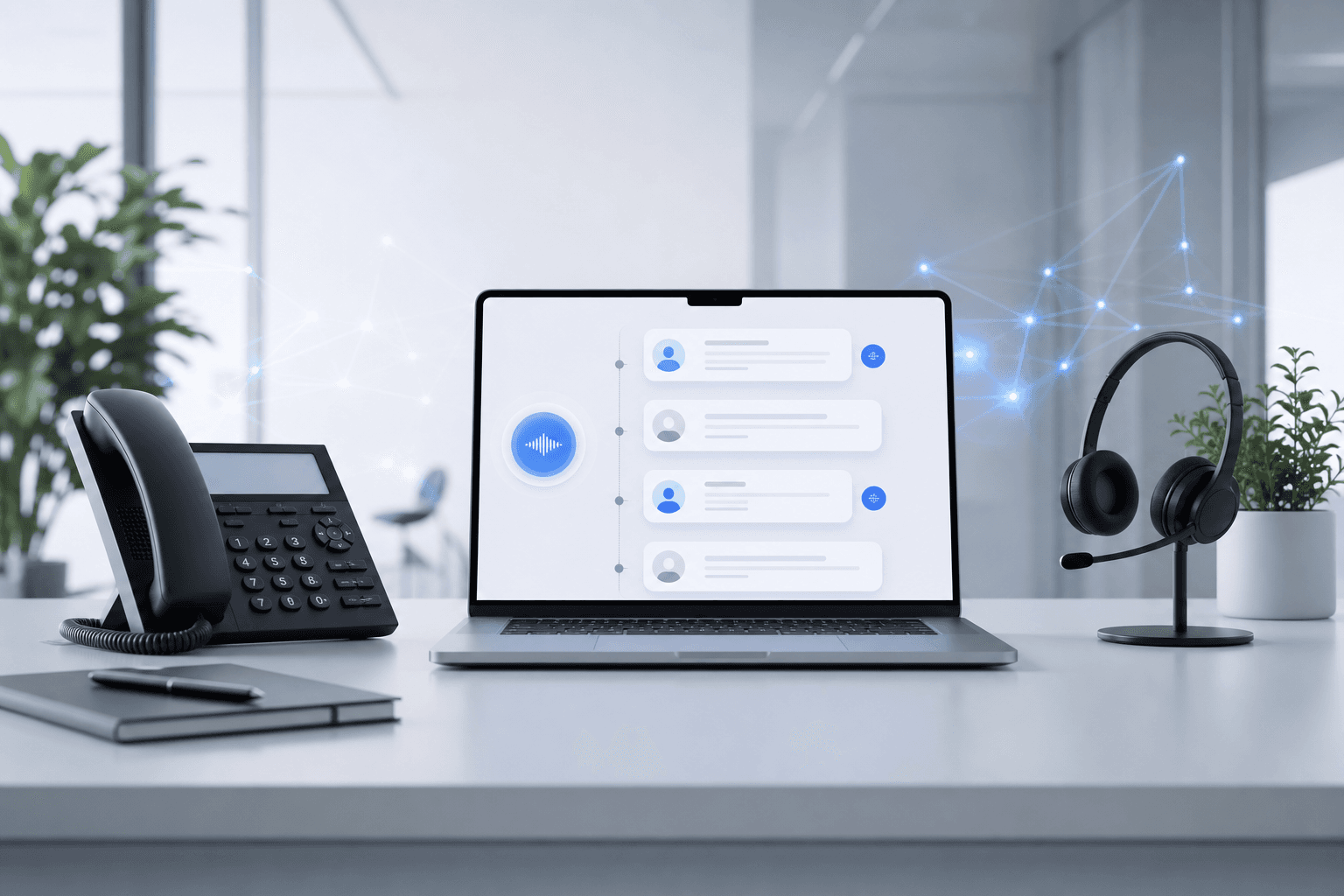
An AI receptionist answers your forwarded business calls with a natural voice, greets the caller using your business name, asks industry-specific intake questions, captures the details, and sends you a structured summary the moment the call ends. It runs 24/7, handles many calls at once, and escalates urgent ones to you in real time.
Best for
- · plumbers
- · HVAC companies
- · contractors
- · dental offices
- · salons
- · any business that runs on inbound calls
Key use cases
- · after-hours call capture
- · overflow when staff are busy
- · structured lead intake
- · instant call summaries
If you're researching AI call answering, the first question is usually the most practical one: how does an AI receptionist actually work? The short answer is that it replaces the gap between a ringing phone and a missed call with a real, structured conversation. Below is a step-by-step look at what happens from the moment a customer dials your number to the moment you follow up — and what makes it different from voicemail or a traditional answering service.
Related reading
- Compare it to a virtual receptionist
Cost, coverage, and which one fits your business.
Step 1: You forward your business number
Setup starts by pointing your existing phone number at the AI — all the time, only after hours, or only when you don't pick up within a few rings (called conditional forwarding). You keep your number, and nothing changes for your callers. Most businesses complete this in about two minutes from their carrier or phone settings.
Step 2: The AI answers instantly with your business name
When a call comes in, the AI receptionist picks up in under a second — no hold music, no voicemail beep. It greets the caller using your business name and a tone you configure, so the experience feels like reaching a real front desk rather than an automated menu.
Step 3: It has a real conversation and asks the right questions
This is the core of how an AI receptionist works. Instead of recording a message, it actively listens, understands what the caller needs, and asks follow-up questions tailored to your industry — service type, address, urgency, timeline, preferred callback time. A plumber's intake looks different from a dental office's, and the AI adapts to each.
- Understands natural speech, not rigid phone-menu prompts
- Asks industry-specific intake questions automatically
- Detects urgency language and flags emergencies
- Handles many calls at the same time without putting anyone on hold
Never miss a call. Never miss a customer.
Set up AI call answering for your business in under 10 minutes.
Start free trial on iOS →On desktop? Try the live AI call demo.
Step 4: It captures structured details — not an audio recording
As the conversation happens, the AI extracts the important information into clean, structured fields: caller name, phone number, reason for calling, location, and urgency. You don't have to listen back to a two-minute voicemail and take notes — the data is already organized for you.
Step 5: You get a summary and the right next step
The moment the call ends, a structured summary lands in your text and email with action items. From there, the conversation routes into the workflow you choose: a callback task, a booking, a dispatch, an estimate request, or a follow-up. The AI receptionist is the entry point to a full front-desk workflow, not just an answering machine.
Related reading
- Explore the full AI workflow
What happens after the call is answered.
What makes it different from voicemail and answering services
Voicemail waits passively and loses ~85% of callers who hang up without leaving a message. A traditional answering service uses human operators with per-minute billing and limited hours. An AI receptionist combines the best of both: it answers instantly like a person, captures structured data like software, runs 24/7, and costs a flat monthly rate with no per-minute charges.
📊 Why the conversation matters
Active conversation beats passive recording on every metric that drives revenue:
- ·85% of callers who reach voicemail hang up without leaving a message
- ·A live response makes a caller far more likely to become a customer
- ·Structured intake means faster, more confident callbacks
- ·24/7 coverage captures the 30–40% of calls that arrive after hours
Contextual internal links
Frequently Asked Questions
How does an AI receptionist answer my calls?
You forward your business number to the AI. When a call comes in, it answers in under a second, greets the caller with your business name, asks intake questions, captures the details, and sends you a structured summary when the call ends.
Do I need new hardware or a new phone number?
No. You keep your existing number and forward calls to the AI receptionist. There's no hardware to install — setup is done in your phone or carrier settings in a couple of minutes.
Can an AI receptionist understand different industries?
Yes. The intake questions adapt to your industry — a plumber's emergency dispatch flow is different from a salon's booking flow or a law firm's intake. Magicline ships with workflows for home services, medical, legal, real estate, auto, and more.
What happens to the call after the AI answers it?
The conversation becomes a structured summary with next-step actions, delivered by text and email. From there it can route into a callback, booking, dispatch, estimate request, or follow-up — whatever workflow you choose.
How fast can I get an AI receptionist working?
Most businesses are live in minutes: download the app, forward your number, pick your industry workflow, and the AI starts answering immediately.
Sources
- Magicline AI receptionist overview
- BrightLocal: Small business consumer call survey
Related Articles
Business Tips
What Is an AI Receptionist? How It Works, Costs, and Best Use Cases
An AI receptionist is AI phone answering software that answers calls, captures leads, summarizes conversations, and helps small businesses never miss a customer.
Business Tips
How Much Does an AI Receptionist Cost? 2025 Pricing Guide
AI receptionist pricing ranges from $30 to $500/month depending on call volume and features. Here's what you actually get at each price tier — and how to choose.
Buying Guide
Best AI Receptionist for Small Business in 2026: What to Look For
Choosing the best AI receptionist for a small business means comparing call quality, lead capture, pricing, setup time, languages, and after-hours coverage.